


Sage Benefits for Digestion: Hildegard’s Sun Herb
Sage benefits for digestion, read through Hildegard von Bingen’s Physica: why she called Salvia officinalis warm, dry and sun-fed, what its bitter principles do, and how discretio keeps its use in measure.

Bertram: Hildegard’s Forgotten Digestive Herb
Bertram, pellitory of Spain, was Hildegard von Bingen’s most-recommended digestive herb—a bitter, saliva-stirring root whose tradition lives on in bitters.

Mugwort: Hildegard’s Bitter Herb for Digestion
Mugwort is the bitter herb Hildegard von Bingen praised to warm the stomach and support digestion. Explore its history, traditional uses, and how to bring it to the modern table with Hildegard’s Bitters.

Digestive Bitters for Appetite Control and Sugar Craving Support
A quick note on framing before we start: digestive bitters are not a weight loss supplement. They don’t burn fat, accelerate metabolism, or block nutrient absorption. Any product making those claims is either exaggerating or selling something other than traditional herbal bitters. What bitters do have well-documented effects on is appetite regulation and sugar craving…

Digestive Bitters for Bloating: Why Most Remedies Treat the Symptom While Bitters Fix the Cause
Bloating after meals is one of the most common digestive complaints — and one of the most aggressively marketed. Walk down any supplement aisle and you’ll find an entire shelf of products promising gas relief: activated charcoal, simethicone, probiotics, digestive enzymes, peppermint capsules. Most of them work on the gas itself, after it’s already been…
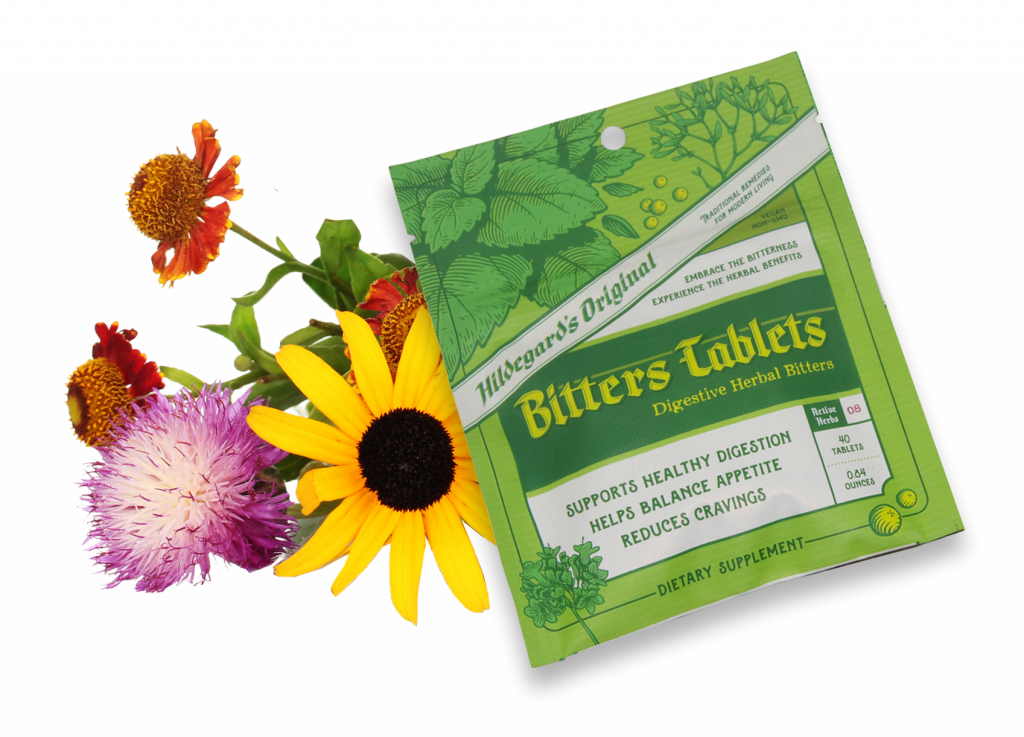
Bitters for Intermittent Fasting: Supporting Digestion at the Breaking Point
The hardest part of intermittent fasting isn’t the fast itself. It’s the meal that ends it. If you’ve practiced any form of time-restricted eating — whether 16:8, OMAD, 24-hour fasts, or longer protocols — you’ve probably experienced this: you make it through the fasting window without issue, then eat your first meal and feel worse…

Gentian Root Benefits: The World’s Most Bitter Plant and What It Does
If you’ve ever tasted something so intensely bitter it made your eyes water, there’s a good chance you encountered gentian root — or something derived from it. Gentiana lutea, the yellow gentian plant native to the mountain meadows of central and southern Europe, holds the distinction of being one of the most bitter substances ever…

Digestive Bitters Tablets vs. Liquid: Which Form Is Right for You?
Walk into any natural foods store and you’ll find digestive bitters in two forms: small bottles of dark liquid tincture, and tablets or lozenges. Ask the staff which is better and you’ll likely get an opinion based on what they personally use, not the science. Here’s what the science and traditional practice actually say —…

How Digestive Bitters Work (And Why the Taste Is the Point)
If you’ve ever popped a digestive bitters tablet and immediately thought “this tastes terrible” — congratulations. It’s working exactly as it should. That intensely bitter flavor isn’t a flaw in the formula. It isn’t a sign that something went wrong. The bitter taste is the mechanism. Understanding this one principle changes everything about how you…

Digestive Bitters Tablets — The Most Convenient Way to Take Your Daily Bitters
The case for digestive bitters is ancient and compelling. Hildegard von Bingen made it in the 12th century; European apothecaries made it in the 17th; modern gastroenterology makes it now. The problem, historically, has always been convenience. Traditional bitters are liquid — often alcoholic, always intensely flavored, and not easily compatible with modern life away…
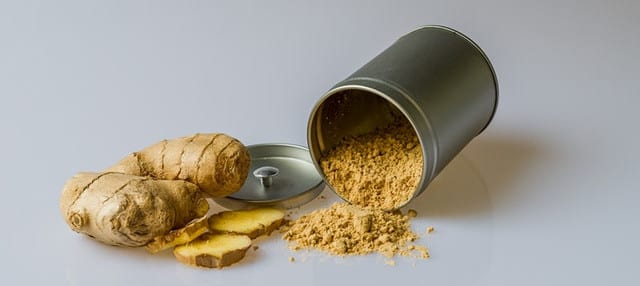
Bitters Before Meals — Hildegard von Bingen’s Pre-Meal Ritual for Digestive Health
The practice of taking bitters before meals is one of the oldest and most consistent recommendations in European herbal medicine. From the monastery kitchens of medieval Germany to the aperitif culture of 19th-century France and Italy, the pre-meal bitter has served the same purpose for over a millennium: to prepare the digestive system for the…

Hildegard von Bingen Bitters — Nine Centuries of Herbal Digestive Wisdom
Hildegard von Bingen (1098–1179) was a Benedictine abbess, composer, philosopher, and visionary who spent most of her life in the monasteries of Disibodenberg and Rupertsberg, both on the Rhine near Bingen in the German Rhineland. She was also, by any measure, one of the most remarkable natural scientists of the medieval period — and her…