
The case for digestive bitters is ancient and compelling. Hildegard von Bingen made it in the 12th century; European apothecaries made it in the 17th; modern gastroenterology makes it now. The problem, historically, has always been convenience. Traditional bitters are liquid — often alcoholic, always intensely flavored, and not easily compatible with modern life away from home.
Digestive bitters tablets change that equation entirely.

Why Tablets?
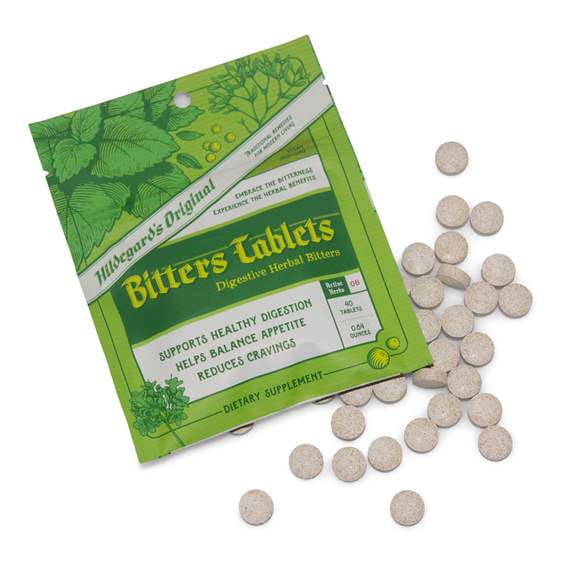
The cephalic phase of digestion — the cascade of secretory responses triggered by bitter taste — requires bitter compounds to contact receptors in the mouth and upper digestive tract. A tablet that dissolves in the stomach would bypass this mechanism entirely. Hildegard’s Original Bitters Tablets are designed to begin dissolving on the tongue and through the mouth and esophagus, delivering their bitter payload exactly where it needs to go.
The result is the same digestive priming effect as liquid bitters — without the alcohol, without the carrying a bottle, without the ritual of measuring drops into a glass. One tablet, before meals, anywhere.
What’s in Hildegard’s Bitters Tablets
The formula draws directly from Hildegard von Bingen’s Physica — the 12th-century Rhineland herbal text that remains one of the most detailed medieval records of plant medicine. Three herbs form the core:
Gentian Root (Gentiana lutea): The foundational European bitter. Hildegard called it Enzian and praised it throughout Physica for its warming, stomach-activating properties. Modern research has identified amarogentin as its key active compound — one of the most potent natural bitter substances known, with documented effects on gastric acid secretion, bile release, and gut motility.
Ginger (Zingiber officinale): Hildegard recommended ginger repeatedly across both her major natural science works for nausea, bloating, and gastric sluggishness. More than 100 clinical trials have since confirmed its efficacy for nausea, motility disorders, and gastric emptying speed.
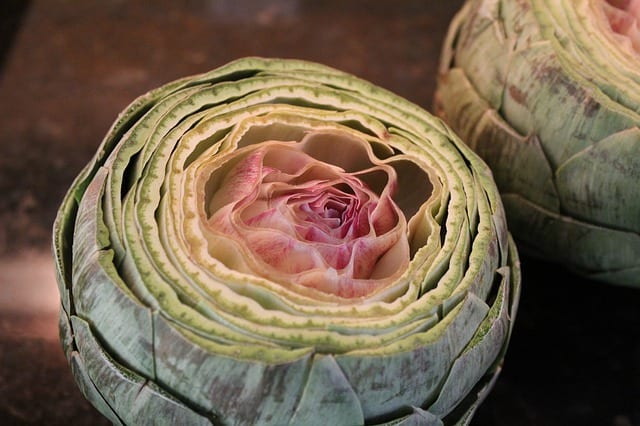
Artichoke (Cynara scolymus): Artichoke leaf extract contains cynarin — a compound with among the strongest documented effects on bile production and liver function in the natural medicine literature. Hildegard’s references to artichoke-family plants in Causae et Curae align precisely with the liver-digestive connections that modern hepatology has confirmed.

How to Take Digestive Bitters Tablets
The Hildegard tradition — and the physiology of the cephalic phase — both point to the same instruction: before meals. Taking bitters 10–15 minutes before eating gives the digestive system time to respond fully before food arrives. Gastric acid builds. Bile is released. Pancreatic enzymes are secreted. When the meal begins, the body is ready.
One tablet before each main meal is the standard approach. Many people find the most noticeable benefits with their largest meal of the day — typically dinner — where digestive preparation makes the greatest difference.
Digestive Bitters Tablets vs. Liquid Bitters
Traditional liquid bitters have one genuine advantage: the bitter flavor hits immediately and intensely. But they carry significant disadvantages — most are alcohol-based, flavors vary widely between brands, and they’re inconvenient outside the home.
Tablets offer consistent dosing, no alcohol, easy portability, and no taste fatigue from the intense liquid format. For people who take bitters daily — as Hildegard intended — tablets are simply more sustainable as a long-term habit.
To understand the herbal science behind each tablet, read our complete guide to digestive bitters and how Hildegard’s formula was developed. For best results, combine your daily tablets with the practice of taking bitters before meals — the timing tradition that maximizes their benefit.
→ Shop Hildegard’s Original Bitters Tablets on Amazon
These statements have not been evaluated by the FDA. This product is not intended to diagnose, treat, cure, or prevent any disease.