
The practice of taking bitters before meals is one of the oldest and most consistent recommendations in European herbal medicine. From the monastery kitchens of medieval Germany to the aperitif culture of 19th-century France and Italy, the pre-meal bitter has served the same purpose for over a millennium: to prepare the digestive system for the work ahead.
Hildegard von Bingen documented this practice with characteristic precision in her 12th-century Physica and Causae et Curae. Her instructions were simple: consume bitter herbs before eating, to “warm the stomach and awaken the forces of digestion.” Nine centuries later, modern gastroenterology has a precise name for what she was describing.

The Cephalic Phase of Digestion
The cephalic phase of digestion is the body’s anticipatory digestive response — triggered by sight, smell, and especially taste, before food even enters the stomach. When you taste something bitter, a cascade begins almost immediately:
Saliva production increases, releasing amylase to begin breaking down carbohydrates and lubricating food for swallowing. Gastric acid secretion rises, preparing the stomach to denature proteins and kill pathogens. The gallbladder contracts, releasing bile into the small intestine to emulsify dietary fats. Pancreatic enzyme secretion increases, providing the enzymatic tools to break down proteins, fats, and carbohydrates completely.
The result: food arriving in a fully prepared digestive tract is broken down more completely, nutrients are absorbed more efficiently, and the bloating, gas, and discomfort of incomplete digestion are reduced.
Hildegard’s instruction to take bitters before meals — not during, not after — was precisely right. The cephalic phase happens in anticipation of food. Bitters work best when they have a few minutes to prime the system before eating begins.

How Hildegard Used Bitters Before Meals
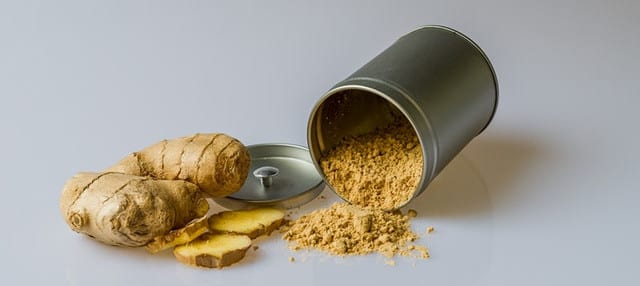
In Physica, Hildegard recommends her key bitter herbs — including gentian (Enzian), wormwood (Wermut), and ginger (Ingwer) — as preparations to be taken “before the table is laid.” In the monastic context, this likely meant a small herbal preparation taken in the period between the concluding prayers and the beginning of the meal — a natural pause in the Benedictine daily rhythm.
The Benedictine tradition of monastic medicine was inseparable from the monastery’s herb garden — the Kräutergarten. Every significant Benedictine house in medieval Germany maintained one. Hildegard’s Rupertsberg monastery, founded in 1150, would have grown gentian, wormwood, yarrow, and dozens of other medicinal herbs within its walls.
The pre-meal bitter was not a luxury or a remedy. It was a daily practice — as ordinary as grace before meals, and built into the same ritual structure.
Who Benefits Most from Bitters Before Meals?
Modern digestive health research has identified several patterns where pre-meal bitters are particularly valuable. People who regularly experience bloating or gas after meals often have insufficient digestive secretion — the stomach and small intestine are simply not adequately prepared when food arrives. People who notice sugar or carbohydrate cravings after eating may be experiencing incomplete macronutrient digestion, leaving the body still signaling for nutrients it didn’t fully extract. People who practice intermittent fasting and eat in compressed time windows may especially benefit from optimal digestive priming at their eating occasions.
Hildegard herself wrote about all of these patterns in Causae et Curae — the desire for excessive sweetness, the heaviness after eating, the fatigue that followed a poorly digested meal. Her solution in each case returned to the same foundation: bitter herbs, before the meal begins.
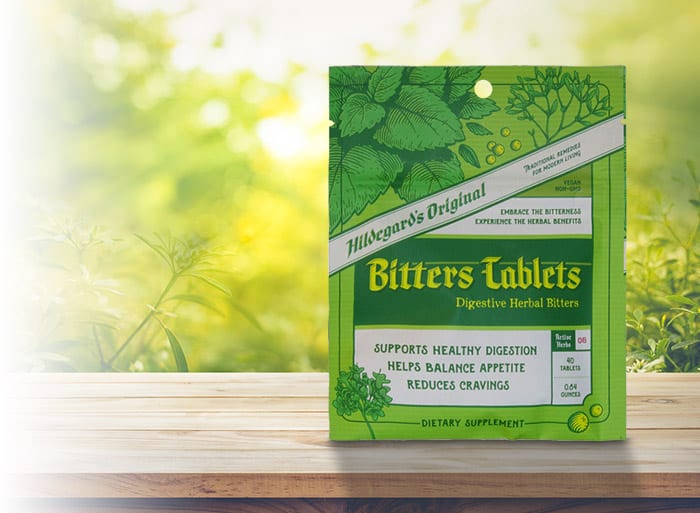
Hildegard’s Original Bitters Tablets — Before Every Meal
One tablet of Hildegard’s Original Bitters — containing gentian root, ginger, and artichoke — taken 10–15 minutes before eating. That’s it. That’s the practice Hildegard described in the 12th century, and that modern gastroenterology has now explained.
To understand the botanical science that makes pre-meal bitters so effective, explore our guide to digestive bitters and the plants Hildegard selected for her formula. For a convenient daily form that fits into any routine, digestive bitters tablets make the pre-meal ritual as simple as opening a bottle.
→ Shop Hildegard’s Original Bitters Tablets on Amazon
These statements have not been evaluated by the FDA. This product is not intended to diagnose, treat, cure, or prevent any disease.